

- Product
Kindling
Product Overview
Sophisticated security with unmatched simplicityCloud SIEM
Pre-configured detections across your environmentHoneypots
Deception technology to detect lateral movementEndpoint Visibility
Real-time monitoring with added detection & responseSecurity Reports
Data visualizations, compliance reports, and executive summariesAutomated Response
Detect, prioritize, and neutralize threats around the clockIntegrations
Cloud, on-prem, and open API connectionsXDR Platform
A complete view to identify risk, and things operational
- Pricing
- Why Blumira
Why Blumira
The Security Operations platform IT teams loveWatch A Demo
See Blumira in action and how it builds operational resilienceUse Cases
A unified security solution for every challengePricing
Unlimited data and predictable pricing structureCompany
Our human-centered approach to cybersecurityCompare Blumira
Find out how Blumira stacks up to similar security toolsIntegrations
Cloud, on-prem, and open API connectionsCustomer Stories
Learn how others like you found success with Blumira
- Solutions
- Partners
- Resources
Blumira Healthcare Cybersecurity
Healthcare organizations have a heightened need to get their security and compliance right. Blumira offers an all-in-one solution that healthcare companies of all sizes and security experience levels can leverage. Blumira enables you to detect and respond to threats so you can prevent ransomware attacks and data breaches.

Addressing the Healthcare Security Gap with Blumira Security Operations
With Blumira cloud-based advanced threat detection and response platform for healthcare organizations, your team will get the support it needs to secure your patient data.
Traditional SIEMs require months of setup that resource-strapped IT teams in healthcare don’t have. Blumira does all of the heavy lifting for you. We parse your data, write and roll out new rules automatically, and provide pre-written playbooks for response.
Try Blumira to detect and respond to threats free for 30 days. It’s fast, and easy for IT and security teams in the healthcare industry to use.
Get StartedSecurity Challenges for Healthcare Organizations
Healthcare organizations have to manage multiple pressures on their security posture to avoid crippling consequences.
-
Regulatory Requirements

Regulatory requirements
Healthcare has greater liability and regulatory requirements than almost any other industry. HIPAA alone includes 154 separate requirements with defined audit procedures - monitoring them all is an enormous task. Any breach can result in hefty government fines and an erosion of customer trust. In fact, healthcare is the target of 25% of data breaches, costing an average of $408 per lost or stolen record (Ponemon/IBM).
-
Legacy Infrastructure

Legacy infrastructure
Due to growth through mergers and acquisitions, many healthcare organizations struggle with an influx of devices that are out of date or don’t work with their infrastructure. This makes it difficult to maintain uniformity in the environment and deploy an additional agent to detect and prevent cyber attacks. -
Resource-Draining SOCs

Resource-draining SOCs
Many institutions use traditional Security Information and Event Management (SIEM) products that only detect cyber attacks, meaning incoming events need to be addressed in real-time before any data is lost. This often requires the build-out of a 24/7 Security Operations Center (SOC) with a team of IT security analysts to sift through alerts, determine their severity, take action on the most important ones, and perform ongoing maintenance–skills and resources that not all healthcare IT teams have available to them. -
Common Healthcare Attacks

Common security issues seen in healthcare attacks
Blumira data shows that healthcare organizations are especially vulnerable to these types of attacks:
- Password spraying – A type of brute-force attack that’s used by attackers to gain initial access into a local hospital’s system.
- RDP connections – Remote Desktop Protocol is often misconfigured to allow public IP access from the internet, which can result in ransomware. Blumira notifies users of any external attempts to connect via RDP to your network to protect against attacker exploitation.
- Lateral movement – Attackers will target hospital network devices for unauthorized access to enable them to move laterally through your environment. Blumira honeypots give you an easy, one-click way to detect and respond to these attempts.
Regulatory requirements
Healthcare has greater liability and regulatory requirements than almost any other industry. HIPAA alone includes 154 separate requirements with defined audit procedures - monitoring them all is an enormous task. Any breach can result in hefty government fines and an erosion of customer trust. In fact, healthcare is the target of 25% of data breaches, costing an average of $408 per lost or stolen record (Ponemon/IBM).
Legacy infrastructure
Due to growth through mergers and acquisitions, many healthcare organizations struggle with an influx of devices that are out of date or don’t work with their infrastructure. This makes it difficult to maintain uniformity in the environment and deploy an additional agent to detect and prevent cyber attacks.Resource-draining SOCs
Many institutions use traditional Security Information and Event Management (SIEM) products that only detect cyber attacks, meaning incoming events need to be addressed in real-time before any data is lost. This often requires the build-out of a 24/7 Security Operations Center (SOC) with a team of IT security analysts to sift through alerts, determine their severity, take action on the most important ones, and perform ongoing maintenance–skills and resources that not all healthcare IT teams have available to them.Common security issues seen in healthcare attacks
Blumira data shows that healthcare organizations are especially vulnerable to these types of attacks:
- Password spraying – A type of brute-force attack that’s used by attackers to gain initial access into a local hospital’s system.
- RDP connections – Remote Desktop Protocol is often misconfigured to allow public IP access from the internet, which can result in ransomware. Blumira notifies users of any external attempts to connect via RDP to your network to protect against attacker exploitation.
- Lateral movement – Attackers will target hospital network devices for unauthorized access to enable them to move laterally through your environment. Blumira honeypots give you an easy, one-click way to detect and respond to these attempts.
Additional Healthcare Cybersecurity Resources
View More
Compliance Security Frameworks and Insurance
6 min read
| April 9, 2026
2026 HIPAA Security Rule Updates: Critical Changes for IT Teams
Read More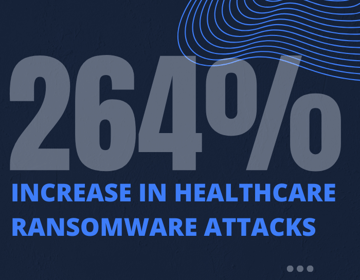
Compliance Security Frameworks and Insurance
5 min read
| May 14, 2025
Reducing Risks to Protect Patient Data & Meet HIPAA Compliance
Read More
Security Trends and Info
4 min read
| April 22, 2024
Ransomware in Healthcare: After-the-Fact is Too Late
Read More