

- Product
Kindling
Product Overview
Sophisticated security with unmatched simplicityCloud SIEM
Pre-configured detections across your environmentHoneypots
Deception technology to detect lateral movementEndpoint Visibility
Real-time monitoring with added detection & responseSecurity Reports
Data visualizations, compliance reports, and executive summariesAutomated Response
Detect, prioritize, and neutralize threats around the clockIntegrations
Cloud, on-prem, and open API connectionsXDR Platform
A complete view to identify risk, and things operational
- Pricing
- Why Blumira
Why Blumira
The Security Operations platform IT teams loveWatch A Demo
See Blumira in action and how it builds operational resilienceUse Cases
A unified security solution for every challengePricing
Unlimited data and predictable pricing structureCompany
Our human-centered approach to cybersecurityCompare Blumira
Find out how Blumira stacks up to similar security toolsIntegrations
Cloud, on-prem, and open API connectionsCustomer Stories
Learn how others like you found success with Blumira
- Solutions
- Partners
- Resources
Detect Attackers’ Lateral Movement
Honeypots are one of the most powerful internal detection mechanisms a network can have, even if they only detect something once in a blue moon. A fully configured honeypot will help detect and prevent cyberattacks from happening.
-
What is a Honeypot?
![honeypot]()
What is a Honeypot?
Honeypots are a clever security tool used to gain visibility into active threats or expose curious insiders who might introduce risk to your environment. A honeypot lures attackers with a network device that appears to contain valuable data. Once an attacker attempts to log in, scan the device, or access a file on the device, the honeypot will notify your team. -
Easily Set Up and Deploy a Honeypot
![out of the box detectionsl]()
Easily Set Up a Honeypot
With Blumira, you can easily deploy virtual honeypots with the click of a button. By placing virtual honeypots at various locations around your environment – such as your workstation and server subnets – you can quickly determine if a threat is poking at hosts to find new avenues for access.
-
Automatically Block Threats
![prioritized alerts]()
Automatically Block and Contain Threats
Once Blumira has detected a honeypot security event, the platform provides step-by-step response workflows. For example, in the case of an unauthorized access attempt, we provide you the option to block the source IP at the switch or firewall level. The playbook then walks you through next steps for further remediation.



What is a Honeypot?
Honeypots are a clever security tool used to gain visibility into active threats or expose curious insiders who might introduce risk to your environment. A honeypot lures attackers with a network device that appears to contain valuable data. Once an attacker attempts to log in, scan the device, or access a file on the device, the honeypot will notify your team.Easily Set Up a Honeypot
With Blumira, you can easily deploy virtual honeypots with the click of a button. By placing virtual honeypots at various locations around your environment – such as your workstation and server subnets – you can quickly determine if a threat is poking at hosts to find new avenues for access.
Automatically Block and Contain Threats
Once Blumira has detected a honeypot security event, the platform provides step-by-step response workflows. For example, in the case of an unauthorized access attempt, we provide you the option to block the source IP at the switch or firewall level. The playbook then walks you through next steps for further remediation.Blumira Customers in Their Own Words
Hear what our clients are saying.

“The honeypots are a cool add-on to the SIEM and a good way to see if there’s lateral movement on our network. It’s not something we would do ourselves, but with Blumira, we were able to click one button and deploy it.”
Mike Morrow
Technical Infrastructure Manager, Ottawa County
“Blumira reduces the number of security staff required to monitor firewall, antivirus, shared drives, infrastructure configs, and overall change management. We're alerted to only the important/critical alerts and there are actually useful information guides to walk you through resolutions.”
Network Administrator
Education Mid-Market Customer
“We have a fair amount of security alerts coming from our security tools and we are a small team. Having Blumira sort through those alerts for us helps give us the ability to focus more on projects and less on alerts.”
Jeff B.
IT Leader, Mid-Market Company
Learn More About Honeypots
Blumira security blog
Security Trends and Info
13 min read
| March 11, 2020
Honeypots: Understanding Their Role in Cybersecurity
Read More
Security Alerts
10 min read
| May 26, 2020
Detecting RDP Attacks With Honeypots: Blumira Data Insights
Read More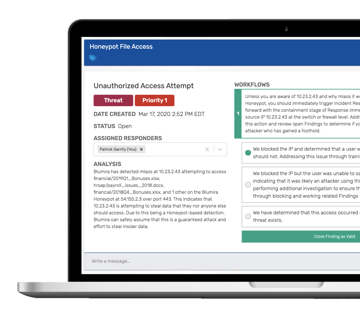
Security How-To
4 min read
| April 20, 2020
Hands in the Honeypot: Detecting Real Security Threats
Read More