

- Product
Kindling
Product Overview
Sophisticated security with unmatched simplicityCloud SIEM
Pre-configured detections across your environmentHoneypots
Deception technology to detect lateral movementEndpoint Visibility
Real-time monitoring with added detection & responseSecurity Reports
Data visualizations, compliance reports, and executive summariesAutomated Response
Detect, prioritize, and neutralize threats around the clockIntegrations
Cloud, on-prem, and open API connectionsXDR Platform
A complete view to identify risk, and things operational
- Pricing
- Why Blumira
Why Blumira
The Security Operations platform IT teams loveWatch A Demo
See Blumira in action and how it builds operational resilienceUse Cases
A unified security solution for every challengePricing
Unlimited data and predictable pricing structureCompany
Our human-centered approach to cybersecurityCompare Blumira
Find out how Blumira stacks up to similar security toolsIntegrations
Cloud, on-prem, and open API connectionsCustomer Stories
Learn how others like you found success with Blumira
- Solutions
- Partners
- Resources
Security is often framed as an endless race against an invisible enemy. But as we look toward 2026, the most successful organizations are stepping away from that high-stress cycle. Instead, they view security as operational resilience, a foundational strength that allows a business to grow with confidence, regardless of the digital landscape.
If you’re managing IT for a growing team, you don't need headlines designed to cause panic. You need a practical, human-centered strategy that builds internal capability. This playbook is designed to transform security from a source of anxiety into a predictable, manageable part of your daily operations.
Introduction: Ransomware in 2026 is a Business, Not Just Malware
The conversation around data protection has fundamentally shifted. For years, the industry focused on stopping the bad guys, as if cybersecurity were a simple game of cat and mouse. Today, ransomware has matured into a sophisticated, highly profitable global enterprise. Modern threat actors operate like organized corporations, employing double and triple extortion tactics, pairing data encryption with sensitive information theft and the threat of public shaming or service disruptions.
Because this landscape is professionalized, your defense has to be strategic. This isn't a basic guide to antivirus or passwords; it is a playbook for IT directors and business leaders who recognize that security is now a core business function.
Let’s be real: no digital wall is 100% unbreakable. The true test of your security isn't just how many attacks you block, but how your team handles it when things actually go wrong.
We call that operational resilience. It’s about building a setup where your team has the visibility and the plan to keep the lights on without missing a beat, even during an incident. It shifts you away from constantly stressing over every threat of the week and gives you the confidence to know that your business is built to keep moving forward.
Threat Analysis: What is Ransomware and How It Moves Through Your Environment
To build a defense that actually holds up, we need to be clear about what we’re really up against. We all know the basic definition: ransomware is malware that locks you out of your files and demands payment to get them back.
But lately, it’s evolved. Today, attackers don’t just lock your data; they often steal a copy of it first. This creates a double headache because you’re not just dealing with the downtime of being locked out, but also the stress of private information potentially being leaked. The tech behind it might be complicated, but the goal is simple: to disrupt your flow and stop your business in its tracks by turning your own data against you.
How Ransomware Spreads in 2026
Attackers rarely hack their way in using cinematic technical wizardry; they typically log in using legitimate but stolen credentials or exploit known gaps in your perimeter. For most organizations, the spread follows four primary paths:
- Compromised RDP/VPN Credentials: Remote access points are the most frequent entry points. If these portals are protected only by a password, they are high-risk targets for automated credential attacks.
- Software Vulnerabilities: Unpatched servers and legacy systems provide open windows for attackers to slip through the perimeter without needing a password at all.
- Supply Chain Attacks: By compromising a trusted vendor or software library that you already use, attackers can bypass your front-door defenses entirely.
- Sophisticated Spear-Phishing: Modern phishing has moved past generic bad grammar emails. Attackers now use highly personalized lures to trick even savvy users into providing access.
Real-World Stakes
We see these patterns in major global incidents involving groups like LockBit and Clop, which have demonstrated that no organization is too small or too tech-savvy to be targeted. These groups focus on state exhaustion and overwhelming technical controls, sometimes using a primary attack as a distraction for a more serious internal breach.
For foundational guidance on these threats, the CISA Stop Ransomware Guide remains the gold standard for government-backed advice.
Phase 1: Your 9-Step Ransomware Prevention Plan
Building operational resilience starts with a practical foundation. Instead of chasing every new security trend, focus on the highest-impact practices that consistently strengthen your business operations. This isn't about achieving a perfect defense; it’s about making incremental, actionable improvements that fit your team’s real-world resources.
Use this 9-step plan as your strategic checklist for ransomware prevention:
- Immutable Backups (The 3-2-1 Rule): Maintain three copies of your data on two different media types, with one copy kept offline or in an immutable format. This ensures that even if an attacker attempts to delete your primary backups, you have a reliable path to recovery without paying a ransom.
- Continuous User Training: Empower your team to be your strongest security asset. Rather than annual compliance checks, use regular, low-stress phishing simulations to build practical knowledge and confidence across the organization. Employees are often overlooked as an asset to early detection.
- Strict Patch Management: Vulnerabilities are open windows for attackers. Establish a clear policy to prioritize operating system, software, and firmware patching of critical, internet-facing servers, appliances, and networking equipment first to reduce your overall risk profile.
- Network Segmentation: Don't let a small issue become a company-wide disruption. By segmenting your network, you prevent attackers from moving laterally between departments, keeping your core operations running smoothly even if one area is compromised.
- Access Control (Least Privilege): Ensure every user has exactly the access they need to do their jobs, and nothing more. This limits the potential impact of a single compromised account. Just In Time (JIT) Access solutions can be a part of this solution that can provide temporary elevation of privileges automatically.
- Advanced Email Security: Initial payloads often arrive via email. Use intelligent filtering to catch sophisticated spear-phishing attempts before they reach a user's inbox.
- Harden RDP & VPNs with MFA: Remote access portals are a favorite target for attackers. Requiring phishing-resistant Multi-Factor Authentication (MFA), such as FIDO2 security keys or passkeys, is one of the single most effective ways to build resilience against credential-based attacks.
- Application Allowlisting: Control what is allowed to run in your environment. By preventing unauthorized executables from executing, you can stop ransomware payloads from ever taking root.
- Regular Vulnerability Scanning: Use tools like a Domain Security Assessment to continuously scan your perimeter. This helps you see your environment through an attacker's eyes and address risks before they can be exploited.
By focusing on these security fundamentals, you transform compliance from a separate burden into a natural outcome of good, resilient business operations.
Phase 2: Ransomware Detection (How to Spot an Attack in Progress)
If Phase 1 is about building the walls of ransomware protection, Phase 2 is about installing the motion sensors. In the framework of operational resilience, we start with a simple, practical assumption: eventually, an attacker might find a way past your perimeter. Detection is what saves you. It is the difference between a minor service blip and a week of downtime.
Signs of Potential Ransomware Risk
Modern attackers are stealthy, but they always leave technical breadcrumbs as they move through your environment. A resilient platform doesn't just look for the files after they are encrypted; it looks for the behaviors that indicate a ransomware attack is in progress:
- File-less Malware (PowerShell execution): Attackers often use your own built-in tools against you. Seeing unusual or highly complex PowerShell commands can be a sign that code is running directly in memory to avoid traditional antivirus software.
- Lateral Movement (e.g., PsExec use): This is the internal travel phase. Seeing tools like PsExec or WMI moving between workstations and servers is a signal that an intruder is trying to expand their foothold.
- Credential Dumping (e.g., Mimikatz): If a system detects an attempt to scrape passwords from memory, it’s a high-priority indicator that an attacker is looking for admin access.
- High-Volume File Modifications: The moment encryption starts, there is a massive spike in file changes. Spotting this in seconds rather than hours is the key to stopping the spread.
- Tampering with Security Tools or Backups: One of the first things a sophisticated attacker will do is try to turn off your motion sensors or delete your backups. Alerts for disabled security services are critical early warning signs.
The Power of a Layered Defense
To catch these signs, the best ransomware protection is a layered one. For years, the industry relied on legacy, signature-based tools that only stopped threats they had seen before. Today, that’s not enough.
True resilience requires a two-part approach:
- EDR (Endpoint Detection and Response): This provides deep visibility at the device level (laptops and servers), allowing you to see and block malicious processes in real-time.
- SIEM (Security Information and Event Management): This acts as the brain, correlating logs from your firewalls, cloud apps, and endpoints. While an EDR might see a single suspicious file, the SIEM sees the bigger picture, like a password spray coming from your firewall that leads to an EDR alert on a server.
By combining these layers, you ensure there are no cold storage waiting rooms for your data. You gain the ability to search across your entire environment instantly, giving your team the clarity they need to act before the first ransom note ever appears.
Mid-Post Callout (CRO): Stop Ransomware Before It Spreads.
Most "prevention" tools only catch known threats. Blumira's ransomware detection spots the behaviors of an active attack, giving you the time you need to respond before encryption begins.
[Button:See How Blumira Detects Ransomware]
Phase 3: The Incident Response Playbook (Staying Calm and In Control)
Operational resilience isn't just about what you do to stay safe; it’s about how you carry yourself when a challenge arrives. Think of security incident management not as a worst-case scenario but as a professional process that protects your business's future. When you have a calm, step-by-step plan, you remove the panic and replace it with decisive action.
If you suspect an incident, follow this strategic playbook to maintain control:
- Isolate with Confidence: The moment a potential issue is detected, your first move is to pause the spread. Disconnect affected systems from the network immediately. By turning off the tap, you protect your healthy data and give your team the breathing room needed to assess the situation without pressure.
- Triage and Identify: Determine exactly what you are working with. Identifying the specific ransomware strain helps you understand its behavior and check for existing solutions. Resources like No More Ransom are invaluable here, providing a community-driven database of known decryption tools.
- Investigate the Path: Use your SIEM logs to find Patient Zero. This isn't about finger-pointing; it's about understanding the entry point and tracing any lateral movement. Because you have full on-demand availability of your data, you can look back over the last year of logs instantly to ensure no hidden footholds remain.
- Eradicate and Rebuild: The most resilient path is to wipe the affected hardware and rebuild from a fresh, known-good state. This ensures that every trace of the incident is removed, giving you a clean slate for recovery.
- Recover from Immutable Backups: This is where your Phase 1 preparation pays off. Restore your data from your clean, offline, or immutable backups. Because you’ve tested these restores regularly, this step is a predictable part of your operations rather than a gamble.
- Reporting and Community Support: Sharing information makes the whole ecosystem stronger. Notify CISA, the FBI, and your legal counsel. In 2026, reporting is also about compliance; new regulations (like CIRCIA) require organizations to report significant incidents to CISA within 72 hours, helping the community stay ahead of emerging trends.
The Big Question: To Pay or Not to Pay?
The answer from both a business and a community perspective is a firm No.
Official guidance from the FBI and <ucisa< u=""></ucisa<> remains clear: paying a ransom does not guarantee the return of your data and often marks your organization as a payer for future attempts. More importantly, every payment fuels the ransomware business model. By focusing on operational resilience and immutable backups, you make your data un-monetizable for attackers, effectively removing their leverage and protecting the broader digital community.
The Future of Ransomware Defense: AI and Ransomware Prevention
As we look toward the future, the role of technology is shifting from blocking everything to supporting everyone. AI and ransomware prevention have become game-changers, not because they replace human expertise, but because they amplify it.
Behavioral Analysis: Your Initial SOC Analyst
Traditional tools relied on signatures such as knowing what a bad file looks like. Today AI-driven Behavioral Analysis focuses on intent. It learns the normal rhythm of your network, when users log in, what files they typically access, and how much data they usually move.
If an account suddenly begins accessing and encrypting thousands of files at 3:00 AM, the system flags the anomaly instantly. This is the power of AI: it sifts through billions of data points to highlight the one behavior that actually matters, significantly reducing alert fatigue and allowing your team to focus on strategic decisions.
Building Your Ransomware Protection Strategy
The most resilient organizations recognize that the best ransomware protection isn't a single product you buy and forget. It is an integrated strategy that combines:
- Prevention: Hardening your environment so you are a difficult target.
- Detection: Having the visibility to see what is happening in real-time.
- Response: Knowing exactly how to recover with minimal disruption.
For many lean IT teams, managing this 24/7 can feel overwhelming. This is where ransomware protection services and automated platforms like Blumira fill the gap. By automating the noise-filtering and providing guided playbooks, we help you build enterprise-grade resilience without the need for an enterprise-sized staff.
Frequently Asked Questions
What are the first signs of potential ransomware risk?
Keep an eye out for pre-encryption behaviors: unusual network scanning, spikes in failed login attempts, or alerts that your security tools or backup services have been disabled.
How do I protect against ransomware on the cloud?
Cloud resilience starts with identity. Secure your consoles with phishing-resistant MFA, monitor for suspicious API calls, and ensure your cloud storage has versioning or immutability turned on.
What's the difference between ransomware prevention and ransomware detection? Prevention is about the locks (Firewalls, MFA). Detection is about the sensors (SIEM, EDR). Prevention aims to stop the entry, while detection ensures that if someone does slip through, they are spotted before they can do any meaningful damage. You need both to be truly resilient.
Amanda Berlin
Amanda Berlin is the Senior Product Manager of Cybersecurity at Blumira, bringing nearly two decades of experience to her position. At Blumira she leads a team of incident detection engineers who are responsible for creating new detections based on threat intelligence and research for the Blumira platform. An...
More from the blog
View All Posts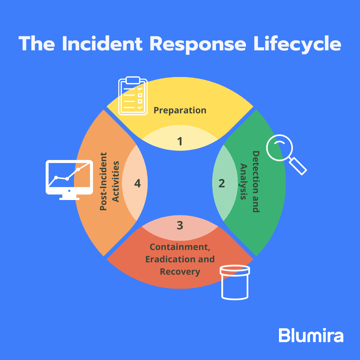
Security How-To
13 min read
| October 30, 2023
Incident Response Strategies for Ransomware
Read More
Security How-To
4 min read
| September 4, 2025
Cybersecurity Training in Manufacturing: Insights from the 2025 Verizon Data Breach Investigations Report
Read More
Security Trends and Info
30 min read
| September 11, 2025
Cybersecurity for Manufacturing - A Comprehensive Guide
Read MoreSubscribe to email updates
Stay up-to-date on what's happening at this blog and get additional content about the benefits of subscribing.